

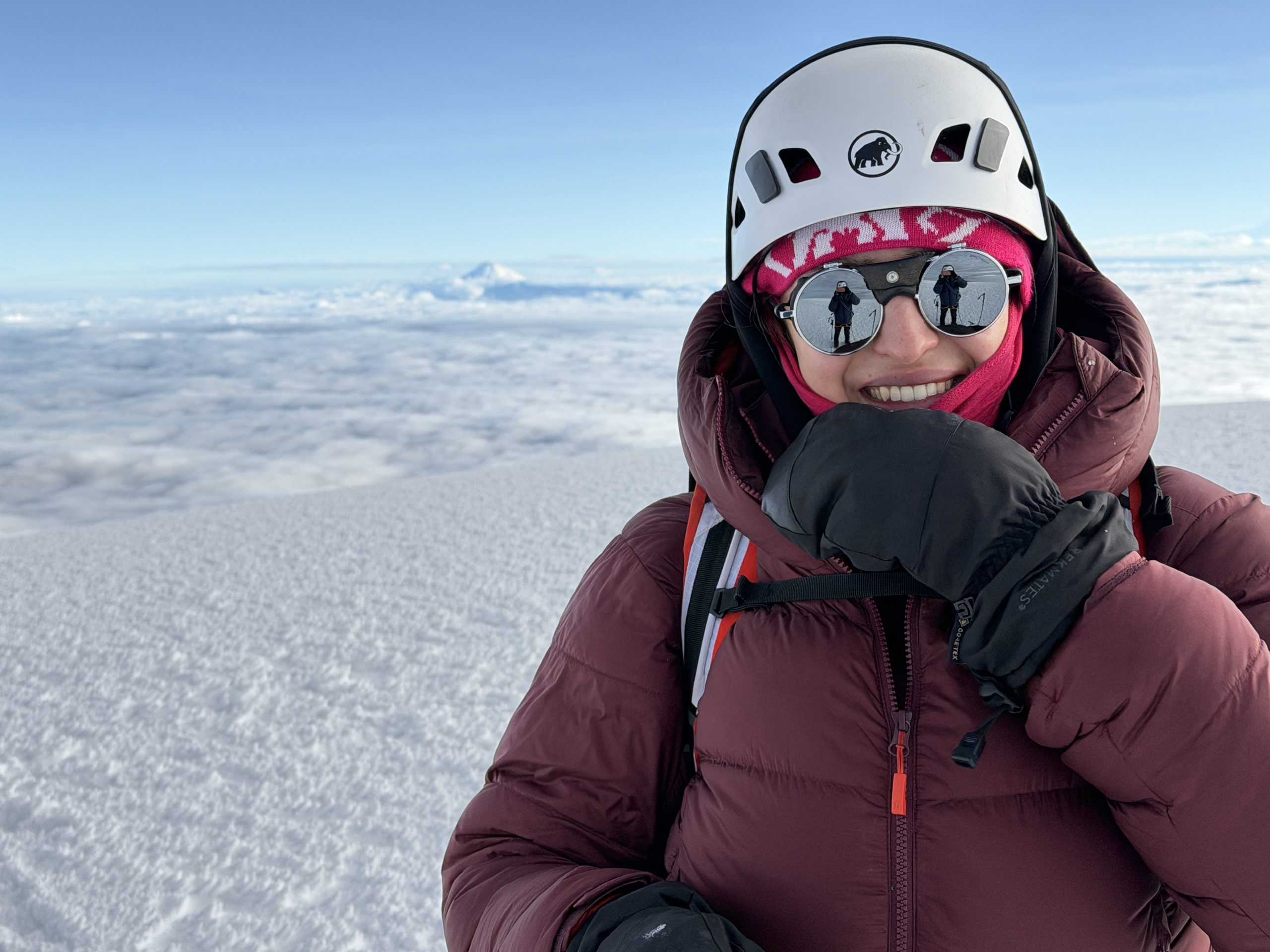
From quiet trails in the Alps and iconic trails in the Tatras, all the way to the volcanic landscapes of Ecuador, Paulina has a way of ending up in places she never imagined she’d go. She’s lived with type 1 diabetes since her teenage years, and over time she’s figured out what really matters when preparing for big climbs, long days outside, and multi‑day expeditions far from home. She knows which snacks keep her going when breaks are short, how to organise her diabetes gear so she can reach anything with gloves on, and most importantly, how to prepare well enough so that she can focus on the mountains in front of her — not the stress of “what if?”
How to prepare for multiday climbs with Type 1 Diabetes
Paulina didn’t grow up in a mountaineering family, no childhood camping trips, no rock-climbing weekends. It all started with one spontaneous hiking trip during the quiet Covid-19 years. Since then, her curiosity has carried her across continents, where she’s tackled tough trails and technical climbs that test her body and mind. She continues to take on day climbs and weekend trips while navigating the unique challenges of Type-1 Diabetes.
She’s lived with Type 1 diabetes for more than a decade, so planning and preparation are familiar territory. But climbing? That comes with a whole new set of things to consider; unpredictable weather, long nights with little sleep, cold layers that don’t always cooperate, gloves that make every task slower, and the simple reality that your body behaves differently when you’re pushing it for hours and hours.
This winter, she travelled to Ecuador to take on two of the country’s most iconic volcanoes: Cotopaxi and Chimborazo. For the first time, she brought Kaleido with her into the mountains.
Preparing for Ecuador: Lists, Layers and the “Just in Case” Kit
Just like Heleen, from our earlier blog post “Travelling with Type 1 Diabetes: Heleen Discovers the World!”, has her holiday lists, Paulina has expedition lists, and they grow a little longer with every trip.
Before leaving, she builds two separate diabetes kits:
one that comes with her into the mountains, and one that stays safely in the accommodation below.
Her mountain kit included:
- plenty of insulin, separated into different bags
- cooling packs to protect supplies
- a glucagon kit
- insulin pens and a glucose meter
- two Kaleido pumps
- extra infusion sets and cartridges
- Dexcom sensors and spares
- fast carbs: gummy bears and energy chews
- taped‑on labels so her guides knew where everything was
“Temperature and access matter the most,” she explains. “My guides always know exactly where my supplies are, especially the things I need quickly.”
Disclaimer: this kit is based on the experience of Paulina and her healthcare professional, please discuss what works for you with your healthcare team.
Climbing Cotopaxi: Learning the Rhythm with Kaleido
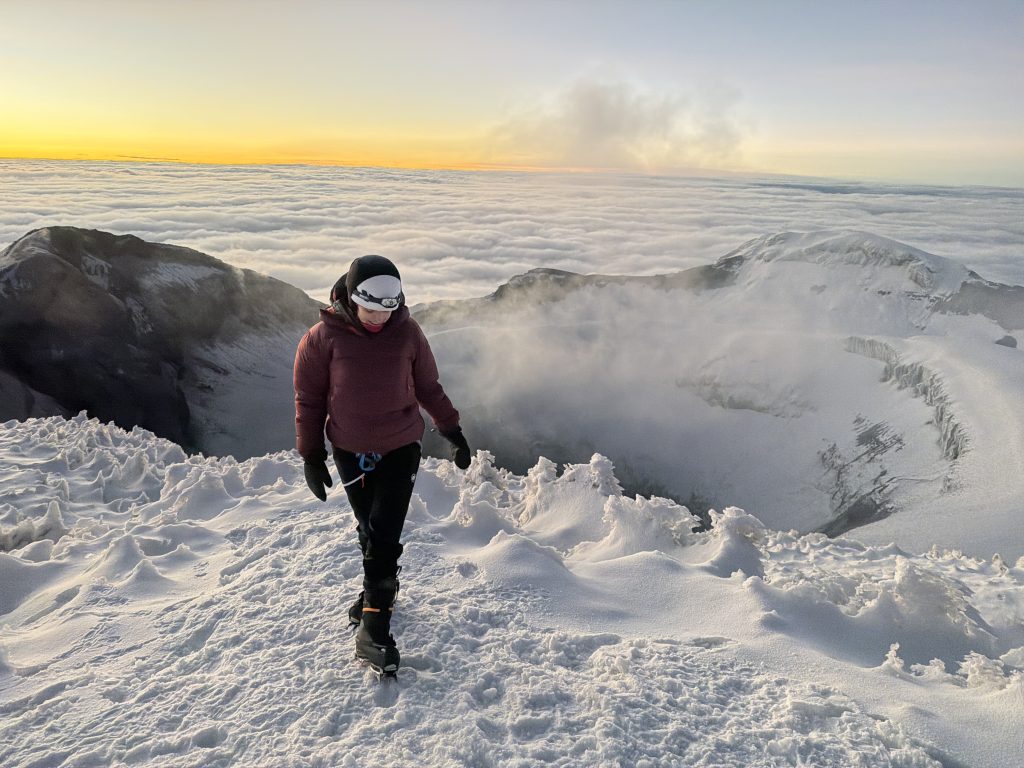
Cotopaxi was the first goal of the trip. After hiking up to the refuge, the team rested for a few hours before starting the climb in the middle of the night, classic mountaineering timing.
This was her first major climb using Kaleido and her loop system.
“At first, the loop was probably as confused as I was,” she laughs. “But after a day or two ,I became more familiar with how the system responds during long climbs.”
Nights in the mountains can send glucose levels in all directions. The loop adapted little by little, helping her manage glucose levels during demanding conditions and giving her the freedom to think about the climb.
Rest breaks on Cotopaxi were short, just long enough to grab some chocolate or gummy bears, adjust a layer, and keep going. Physical activity mode raised the target threshold and provided alerts consistent with its intended functionality., helping her stay ahead of lows.
As the sky turned lighter, she and her guide reached the summit of Cotopaxi. “It felt unreal. Completely surreal and worth it.”
Chimborazo: The Toughest Challenge
A short rest later, it was time for Chimborazo: the climb she expected to be the most challenging. And it was.
The approach was long, sleep was minimal, and her body was already tired from the days before. She started the climb feeling exhausted and unsure.
From there, it was all commitment. Step after step, guided by her headlamp and her guide’s voice, she worked her way up the final stretch.
And then… the summit. A moment of pride, relief, and overwhelming emotion.
“It was the hardest thing I’ve ever done. But also, one of the best days of my life.”
Why She Shares Her Story
People often tell Paulina they’re amazed she climbs with Type 1 diabetes. She appreciates the support, but that’s not the point.
“I don’t need praise because of diabetes,” she says. “I just want people to know it’s possible. Yes, it takes preparation. Yes, there are extra steps. But you can still do the things you love.”
Her next climbs are already on her mind. But Ecuador, Cotopaxi and Chimborazo, will always stay special: the place where she learned she could push her limits, trust her preparation, and rely on Kaleido to make the complicated parts feel just a little easier.
About Paulina
Paulina lives in Amsterdam and discovered mountaineering only a few years ago. Now she spends most of her time training, planning and climbing, always chasing the next view, the next challenge, and the next summit. She hopes her experiences encourage more people with Type 1 diabetes to explore the outdoors and trust themselves to take the first step.